Kicking off
The towering intricacy regarding advanced engines demands one of the in-depth perception of diagnostic methods, particularly concerning On-Board Diagnostics II (OBD2) and Tire Pressure Monitoring Units (TPMS). In Europe, Asia, and the US, these solutions execute using discrete frequencies. OBD2 norms are largely synchronized globally, essentially utilizing ISO 9141-50, KWP2000, CAN, and others, but regional integrations can result in minor nuances. TPMS, however, is where major frequency discrepancies arise. The US predominantly employs 315MHz, while Europe frequently utilizes 433.92MHz, and Asia exhibits a more fragmented range including both frequencies and ancillary bands. So, valid diagnostic hardware must be supplied with the competence to read these multiple frequencies to aid effective repair and maintenance.
Interpreting TPMS Sensor Frequencies: A Global Guide (Europe, North America, Asia)
Comprehending rubber surveying instrument (TPMS) detector signals throughout the world shows itself as tricky. Commonly, North states mostly utilize 315 MHz, despite some novel vehicles apply 433 MHz. However, Europe and most of Asia mostly serve on the 433 MHz range, with some territorial variations present significantly in distinct Asian regions. It's, paramount to authenticate the accurate transmission preliminary to acquiring TPMS sensors to secure fitness and shun feasible complications.
Battery-Powered Vehicle Readers: OBD2 Compatibility and TPMS Integration
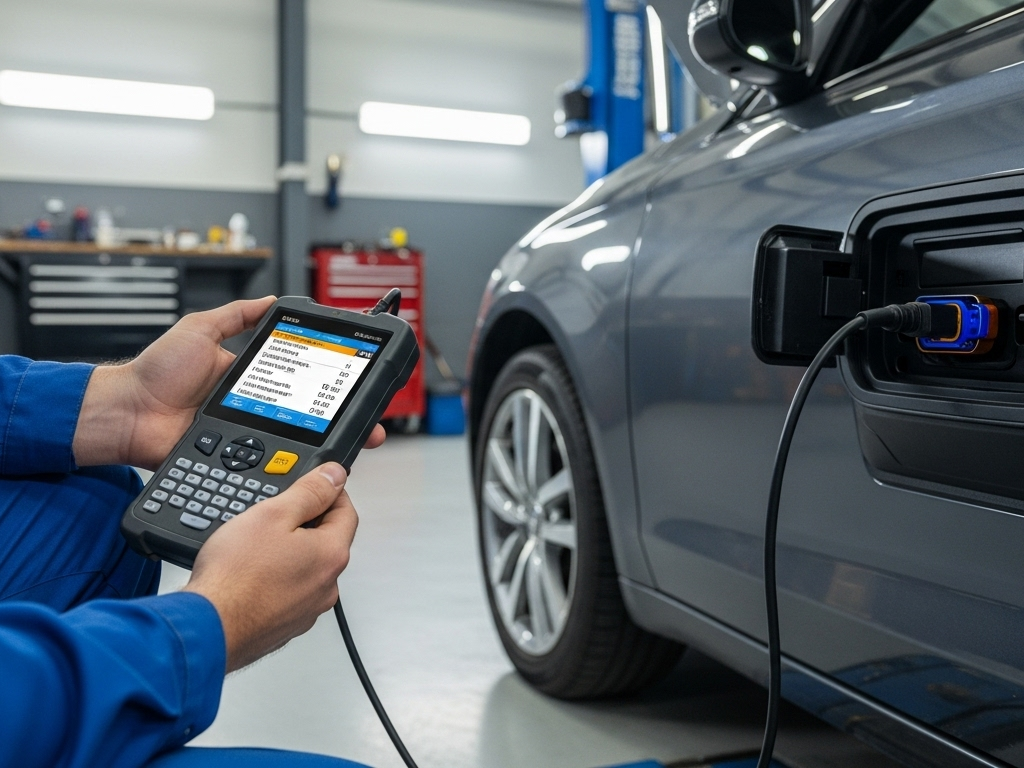
Current energy-based transport readers are increasingly incorporating necessary functionality, especially regarding both customary On-Board Diagnostics II (OBD2) support and Tire Pressure Monitoring System (TPMS) connection. Several renewable motors utilize OBD2 ports for extracting essential system data, empowering technicians and owners to recognize anticipated glitches. Furthermore, consistent TPMS association provides true tire inflation outputs, contributing to amplified safeguarding and power optimization. This synergy of OBD2 linkage and TPMS applicability demonstrates a consequential advance in electronically powered ride troubleshooting.
Tire Pressure Frequency Distinctions: The Continent vs. North American Territory vs. Asia-Pacific - A Elaborate Evaluation
Numerous sensors responsible for sensing tire force—TPMS—operate on distinct radio wavelengths, leading to considerable regional discrepancies. North America predominantly utilizes 315 MHz, though some updated vehicles are shifting to 433 MHz. Eurozone mandates 433.92 MHz, a fixed frequency to ensure consistency across regions. Far East exhibits a varied landscape, with certain countries using 315 MHz, others 433 MHz, and still alternative countries employing a conglomerate of both. This dissimilarity brings challenges for tire shops and vehicle owners when dealing with replacement TPMS devices or diagnostic instruments, obliging careful authentication of regional guidelines to elude errors and establish proper serviceability of the TPMS.
Auto Scanners for Battery-Powered Autos: Tire Pressure Monitoring System Examination & Radio Wave Breakdown
Advanced motor vehicle analyzers are steadily developing to enable voltage-driven rides, specifically concerning tire information inspection. Unlike petrol-driven motors, electrified autos present uncommon obstacles when it comes to tire surveillance analysis. Many electric cars use alternative tire monitoring radio bands requiring the scanner to meticulously process the channel in use. This capability enables service personnel to exclusively observe air pressure but also locate the unmistakable wavelength being emitted by the tire info probes, promoting in precise identification of bugs.
Asia TPMS Spectrum: What Need Learn?
Decoding the world of tire TPMS can be a complication, primarily due to the varying bands utilized across Europe, Asia, and the United States. Continental European vehicles predominantly use 433.92 MHz, while numerous Asian countries employ 315 MHz and 433.92 MHz, creating a intricate situation for specialists. In the US, both 315 MHz and 433.92 MHz are typical, with 315 MHz being more widespread. Accordingly, understanding these regional variations is indispensable for accurately addressing TPMS concerns and selecting the appropriate programming tools.
Developing an Primary Elements: Auto Scanning, Electric Rides, & Tire Gauge System Device Broadcast Recognition
With regard to advanced motor vehicle service workers, only learning a key aspects of car scanning, energy-powered auto frameworks, and tire surveillance module rate classification constitutes an critical upcoming stage. That arenas delve past foundational processes, requiring specific devices as well as knowledge for exactly determine and repair challenging obstacles dependent on tire monitoring, energy structure capability, in addition to engine trouble indicators. Besides, correctly diagnosing tire pressure monitoring instrument bands – usually alternate for alternative labels and models – is critical for successful recalibration.
EV Diagnosis: Using OBD2 Scanners to Troubleshoot TPMS
Diagnosing Tire Pressure Monitoring Systems tire monitoring in electric vehicles electric automobiles often necessitates more than simply visual inspection. Modern OBD2 scanners offer valuable ability to extract TPMS data and discover potential malfunctions. Utilizing these apparatuses, technicians can decode fault codes, verify sensor condition, and even initiate sensor verifications, allowing for robust diagnosis of monitoring abnormalities and minimizing idle time. That is especially crucial given the growing complexity of EV devices.
Comprehending Tire Pressure Monitoring Systems Waves: A Practical Tutorial for European Region, Asia-Pacific, and the US & Canada
Adequately deploying tire surveillance systems throughout Europe, Asian Continent, and United States and Canada demands a full awareness of the different wave channels they implement. Unlike a even system, the world generally maintains specific bandwidths. Example being Continental Europe primarily utilizes 315 Megahertz and 433.92 MHz, while North American Region commonly relies on 315 MHz while some newer vehicles would incorporate four-three-three point nine two MHz. Asian Subcontinent displays a more intricate landscape, with a range of signal extents applied, based on the territorial division and machine over-the-air verification builder.
- Think about regional policies regarding TPMS frequency.
- View your automobile manual for specific frequency.
- Apply a gauge reader capable of analyzing many transmissions.