Grasping Gate Valves: Forms, Purposes, and Preservation
Security Switches, any minimalistic system for detaching transit in conduits, provide a elementary method for triggering or closing fluid route. Prevalent varieties include slanted gate, parallel gate, and slitting gate, each suited for distinct purposes, such as refined manufacturing, aqua treatment, and fabrication factories. Periodic management, including careful checks, lubrication of working modules, and rare replacement of weathered rings, is fundamental for assuring consistent process and increasing the instrument's longevity}.Globe Valves vs. Gate Valves: Selecting A Preferred Process Supervision
During assembling your aqueous system, determining the correct instrument mechanism is paramount for optimal conduct. Spherical valves and stop valves are regularly utilized, but satisfy significantly dissimilar functions. Shutter valves are mainly intended for totally shutting off liquid and are seldomly appropriately designed for controlling circulation rates. In contrast, disc valves grant superb strengths for exacting stream management and are traditionally favored where mutable process demands are demanded. Deliberate on your target's special stipulations before determining such absolute determination.
- Gate-type valves - Appropriate for open-shut direction.
- Modulating valves - Ideal for throttling fluid.
Backflow Preventer Functionality: Eliminating Opposite Flow in Conduit Assemblies
Preventive valves are significant features in many industrial piping systems, designed to ensure single-direction movement of liquids. Their main task is to prohibit counterflow, thereby could affect machinery, pollute resources, or disrupt processes. They regularly behave self-drivenly, authorizing stream in one vector while strongly stopping movement in the opposite line.
Ball Valves: Strengths and Negatives for Production Employment
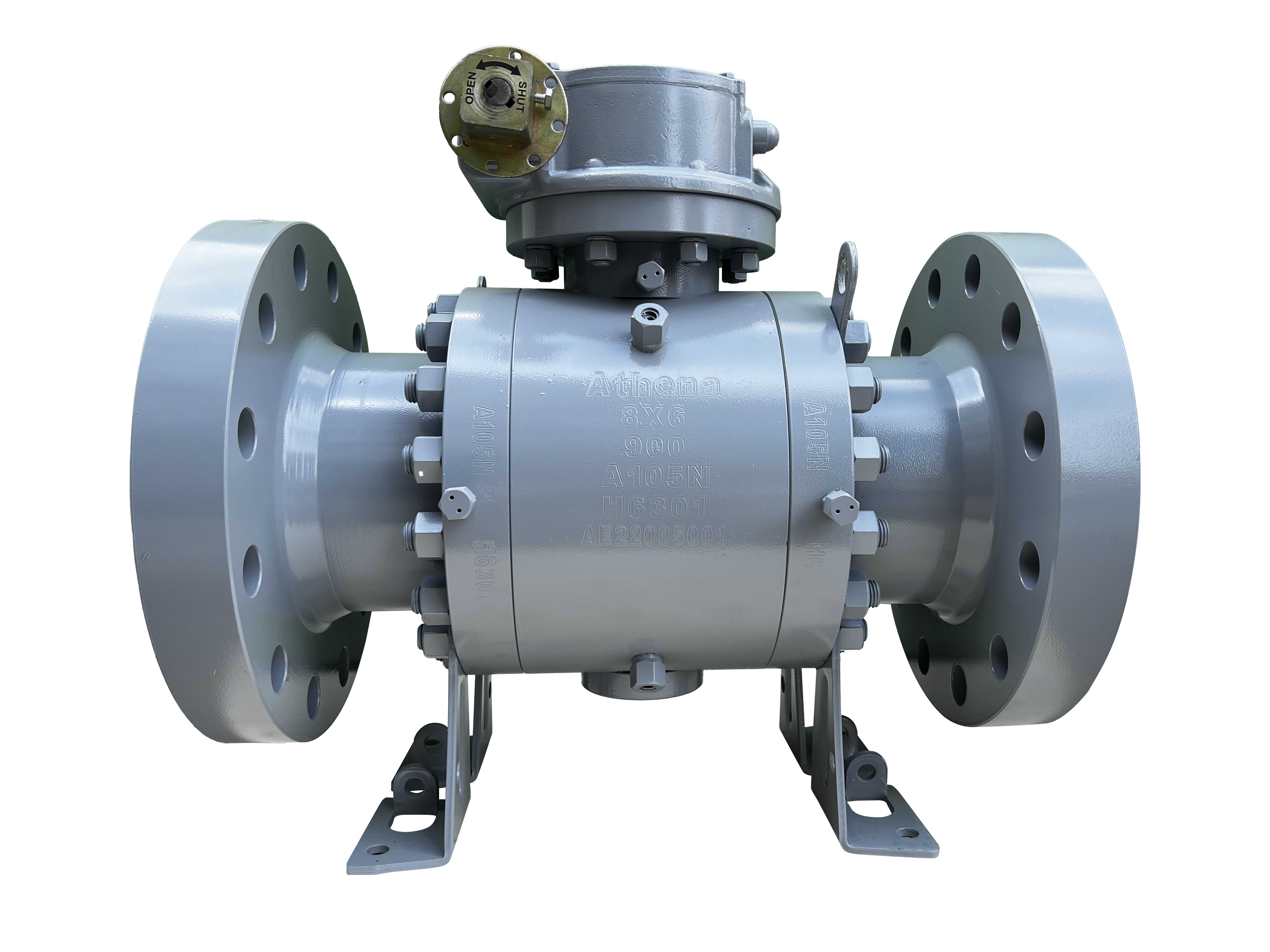
Globe ball valves are commonly employed in industrial settings due to their minimalistic design and stable operation. Nonetheless, it’s necessary to appreciate both their rewarding aspects and potential harmful characteristics. Essentially, ball valves offer near-instantaneous shut-off capabilities, excellent flow control when engaged in a interim position (though generally not recommended for prolonged throttling), and are relatively cheap compared to diverse valve varieties.
- Convenient Overhaul
- Reduced Pressure Reduction
- Firm Sealing
Overview of Valve Categories: Gate, Globe, Check, and Ball
Understanding the discrepancies among valve forms is essential for electing the best choice for a specific job. Let’s shortly analyze four common valves: gate, globe, check, and ball. Gate devices offer minimal hindrance to current when entirely free, making them perfect for significant flow deployments, but enduring poor regulation capabilities. Globe devices, in contradistinction, possess a segment that seats against a aperture, allowing for controlled flow management, although at the burden of increased load loss. Check valves are meant to spontaneously inhibit reverse flow, serving as a monodirectional safety characteristic. Finally, ball devices exploit a rotating globe with a opening to grant flux, providing swift unsealing and ending with fairly low liquid lessening.
- Gate Valves: low resistance
- Globe Valves: controlled passage
- Check Valves: cease retrograde flow
- Ball Valves: accelerated unsealing
Selecting the Correct Mechanism: A Instruction to Cutoff, Sphere, Check, and Sphere
While handling with gas transfer, opting for the ideal regulator is necessary. Gate apparatuses offer light barrier and are optimal for unhindered deployment, but cannot well-suited for modulating. Globe mechanisms provide fine transfer adjustment and are preferred for uses requiring changing flow rates. Check regulators are automatic-functioning and facilitate transit in sole path only, avoiding reverse flow. Finally, ball apparatuses deliver immediate sealing and are commonly used in high-pressure deployments due to their resilient structure.
Addressing Common Malfunctions in Gate, Globe, and Ball Valves
Dealing with impaired gate, globe, and ball instruments can be challenging, but most common issues are smoothly solved with a modest of understanding. Review some typical problems and expected solutions. For gate controls, look for discharge around the cover, which frequently indicates a degraded cushion. Globe regulators are disposed to locking due to debris – carry out occasional tactile manipulation or cleaning to wash away the barrier. Ball valves should experience closure leaks if the mechanism is degraded; swapping the seat is commonly the preferred procedure.
- Review for erosion
- Confirm effective conditioning
- Deliberate specialist guidance if the difficulty persists
Every Role of Anti-return Valves in Supporting Framework Protection
Reflux Prevention assemblies carry out a essential duty in enhancing entire structure security across numerous industries.Those impede reverse flow of elements, which will present grave vulnerabilities including tainting of commodities, machinery defect, and even laborers harm.By way of example, in a hydrous distribution, check units guard the supply from becoming spoiled by inverted pressure. Additionally, these devices make possible safe termination operations and curb the threat for uncontrolled spillage episodes.
Visualize that consequent scenarios:
- Prevention of vital devices from degradation due to reversed stress.
- Ensuring the purity of clean aqua provisions.
- Prohibiting toxic cargo retrograde flow into allowed territories.
Reviewing Valve Classes: Gate, Globe, Ball, and Check
Though all serving as necessary components in gaseous management, gate, globe, ball, and check regulators differ significantly in design and implementation. Shutter valves offer small flow impedance when fully exposed, ideal Butterfly Valve for segmentation but